Introduction to Ahmedabad's Town Plan
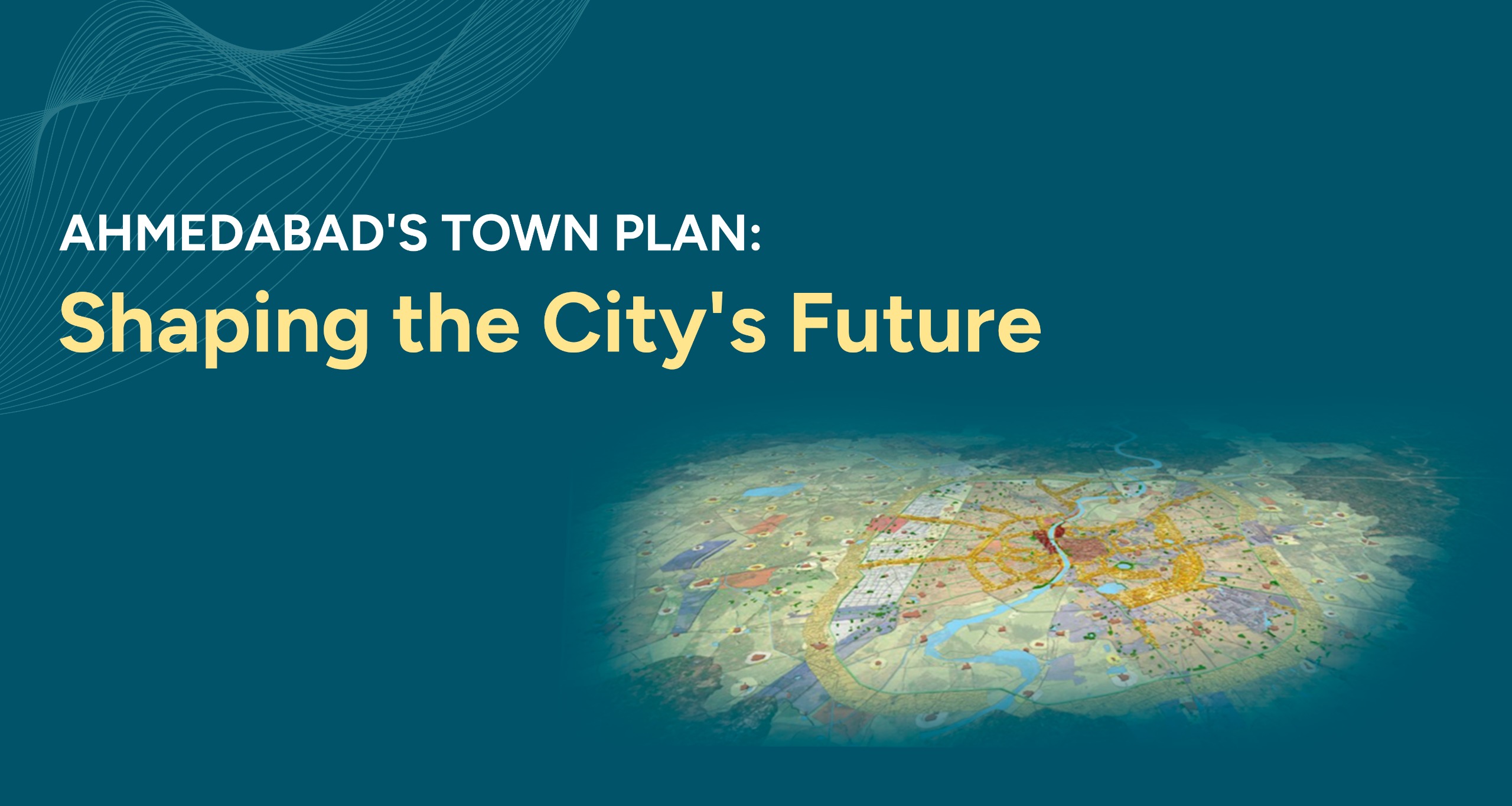
Ahmedabad is one of the leading cities in India and its town plan also amalgamates past heritage with the developmental future. Established in the year 1411 by Sultan Ahmed Shah, the city was planned and designed on the banks of the river Sabarmati. The features of its design are a harmonious combination of historical and contemporary architecture where the ancient structures are paired with the newly constructed ones.
The oldest area of the city was surrounded by the 10-kilometer long wall with twelve gates; it is a perfect example of the medieval town layout. It has compact settlements known as ‘pols’ that fostered togetherness. Civic development was very slow in the city till independence, however, later on, many architects and city planners including Patrick Geddes and Charles Correa brought significant changes in the city. It is a very important aspect of architecture and they focused on how to maintain the old structures while constructing more advanced structures.
Ahmedabad today is a well-planned industrial area, educational hub and has well maintained gardens and parks, thus making it a good example of how urbanization should be done. An ambitious project is the Sabarmati Riverfront that transformed the river frontage for public use making Ahmedabad even more pedestrian friendly.
Impact of Town Planning on Real Estate in Ahmedabad
Smart planning of the town has also affected the real estate business of Ahmedabad to a great extent and has experienced a lot of growth and development. This is due to the fine approach the city has taken in the management of the city’s architecture where there is a blending between history and modernity in the construction of new structures thus attracting many investors in real estate. Localities such as SG Highway, Prahlad Nagar, and Bopal are preferred due to factors such as proper planning of the area and connectivity.
Therefore, the Ahmedabad Urban Development Authority (AUDA) master plan has assisted in the development of the city’s growth, through provision of adequate residential, commercial and industrial zones. This has led to the growth of the real estate industry with the development of integrated township, low cost, luxury housing, etc.
Such large-scale projects such the Sabarmati Riverfront, metro rail, and smart city projects have only added to the beauty of the city and have also helped in increasing the prices of properties. Therefore, Ahmedabad together with its property market is experiencing a high growth rate ideal for investors and developers. The combination of tradition and the modern planning is still the characteristic of the city that influences the rather active real estate market.
Key Features of Ahmedabad’s Modern Town Plan
Ahmedabad the modern town planning tells us how the cities can develop smartly without any harm to the environment. One of the important aspects of this is how the city is subdivided to contain residential, commercial, and industrial space. This prevents uncontrolled development of the city and keeps it compact enough to make traveling convenient for its inhabitants.
The roads, bridges, and the Ahmedabad Metro give a better means of transport and help to avoid traffic congestion in the city. Ahmedabad is also applying smart technology to control such things as traffic or garbage more effectively. They have also done a lot of parks and more green land which is good for purification of the air and provision of beautiful places for people to enjoy.
Ahmedabad is also ensuring that everyone in the society can easily access shelter. He is constructing cheap houses and rehabilitating inferior areas of the city. Also, initiatives such as Gujarat International Finance Tec-City (GIFT City) indicate that Ahmedabad is eager to be a large global city, prepared for the future.
Transportation and Connectivity in Ahmedabad’s Town Plan
Transportation is also a part of Ahmedabad’s town plan meant to facilitate the movement of people around the town. The city has 215 km+ of special lanes for buses labeled BRTS, and a Metro train system with 6 lines that sum up to 90 km of length. These means of transport are recent and they assist in minimizing traffic and are friendly to the natural environment.
Ahmedabad also has 75 flyovers and 40 bridges over railways so it becomes comparatively easy to navigate within the city. Located close to the national highways such as NH-8, NH-8A and NH-59, they can easily transport goods and it is well linked to other large cities.
This is the Sardar Vallabhbhai Patel International Airport through which Ahmedabad maintains its link to the world as among the busiest airports in India. It also applies smart solutions in traffic regulation and has applications to assist people in using public transport.
Each of these actions illustrates that Ahmedabad is ready to develop as a green city that improves the quality of life of its inhabitants.
Case Study: Successful Implementation of Town Planning
Out of all the smart planning that really worked, the Sabarmati Riverfront project in Ahmedabad is a perfect example. Originally, it was used in order to beautify the riverbank, to transform an area of an industrial city into a beautiful 11 km long line of parks and paths for strolling. The whole project was completed at the cost of ₹1,500 crore and it requires a lot of effort to make land from sea and construct beautiful gardens, pathways and joyful and amusing spots.
It not only beautified the city of Ahmedabad but also ensured safety from floods, the city was safe during the rainy seasons. Now it has turned into a tourist destination for events such as the International Kite Festival and Sabarmati Festival for which millions of tourists throng to the place. Also, it positively affected the economy by revitalizing the surrounding areas and increasing the demand for business.
This project explains how a city can become better in which to live by having good planning with people’s participation and sustainable ideas. Thus, Ahmedabad has set an example for other cities to beautify their areas and to make the existence of people cheerful.
Ahmedabad’s Green Spaces and Recreational Areas
This is because large parks and recreation centers enhance life in this city and Ahmedabad is not short of them. There are more than 19 gardens and parks with the area of more than eighty-five hectares in total. These areas are like the lungs of the city and have provided people with the opportunity to have some rest from the intensive city rhythm.
Some of the famous parks include the Law Garden night market, where events can introduce the city’s culture; and Victoria Garden, a park from the British colonial period that has many kinds of plants.
Another attraction in Ahmedabad is Kankaria Lake which is a beautiful place for boating, enjoys the rides, and is a part of some of the fun activities and particularly during festivals. These green places are not only beneficial for human bodies but also for the earth and unite people. Ahmedabad is trying its best to maintain these areas clean and neat with proper development of the city without affecting nature and history.
Challenges and Future Prospects of Town Planning
As it will be seen, city planning of Ahmedabad has its own problems and opportunities. One huge issue is managing the way the city extends and how many citizens it accommodates and maintaining such aspects as roads and services in good condition. People need homes they can actually pay for, so the city is trying new methods of constructing homes and revitalizing old sections of the city.
Maintaining the health of the environment is also a matter of concern nowadays. In order to retain the environment, the city would like to improve approaches to construction and organization of trash. Congested traffic and inability to move around more conveniently are also some of the factors that make it difficult to live and breathe here.
In the future, Ahmedabad has plans to apply intelligent technology in order to improve the function of the city and its development in a friendly manner to the environment. Ideas such as expansion of the metro and rehabilitation of some areas of the city are opportunities to make the city more comfortable to live in and attract more customers.
With such problems addressed using smart ideas and people’s participation, Ahmedabad can guarantee that people have good shelter and the city continues to develop.
Government Policies and Regulations Shaping Ahmedabad’s Town Plan
Ahmedabad has a plan known as the Ahmedabad Development Plan (ADP) that dictates where structures can be put up in the city including houses, shops and carriageways. They also revise this plan frequently to reflect the changes in growth patterns of the city and its requirements.
To ensure that these rules are complied with, there is the Ahmedabad Urban Development Authority (AUDA). They try to ensure that houses, boutiques, and factories are constructed in a manner that is compatible with each other. Historic locations such as the old city with the walls have certain guidelines that protect ancient structures while improving situations at the same time.
The government also assists in ensuring that people can get housing within their means and also renovates less developed neighborhoods. Programs such as Smart City Mission generate funds to make the city smarter, meaning that it has better technologies to ensure proper functioning.
All these plans prove that Ahmedabad is trying its best to progress in the right direction where everyone in the city will be benefited along with the protection of the environment, no discrimination, and the city should be prepared for the upcoming challenges.
CONCLUSION
Thus, the example of Ahmedabad proves that with proper planning, one can combine the old and the new to create a city that is active and beneficial to all. Good examples are cleaning up Sabarmati Riverfront, creating many parks, and having efficient means of transport which demonstrate how the city responds to the people and sets laws that would benefit everyone.
They’ve had to correct such issues as cities expanding too far and enforcing proper health of the natural environment. Ahmedabad has been wise on how to solve these issues, which demonstrate how powerful and prepared they are to continue improving this life here.
Thus, it is possible to state that, along with following intelligent ideas in the sphere of cities’ development, Ahmedabad proved that everyone should have equal opportunities to live well and be happy, and, therefore, it can be considered as a reference point for other cities in India and, with a great probability, all over the world.